
Failure is a bonding problem, not a product problem
Coatings are engineered to stick to concrete. What they cannot do is stick to something sitting on top of concrete — a sealer, a curing compound, an old coating, dust, or a film of oil worked into the surface over years.
Put a good system onto any of those and it will bond to the layer rather than the slab. It will look perfect on handover and let go later, usually in the busiest part of the floor first.
The three ways it shows up
Peeling and flaking. The coating separates in sheets or patches. Almost always a bond failure at the slab.
Tyre pickup. Hot tyres lift the coating where a car parks. A garage-specific symptom, and again a bonding issue rather than a durability one.
Bubbling or blistering. Often moisture moving up through the slab with nowhere to go. This one is worth identifying before any coating goes down, because it does not resolve itself.
What prevents it
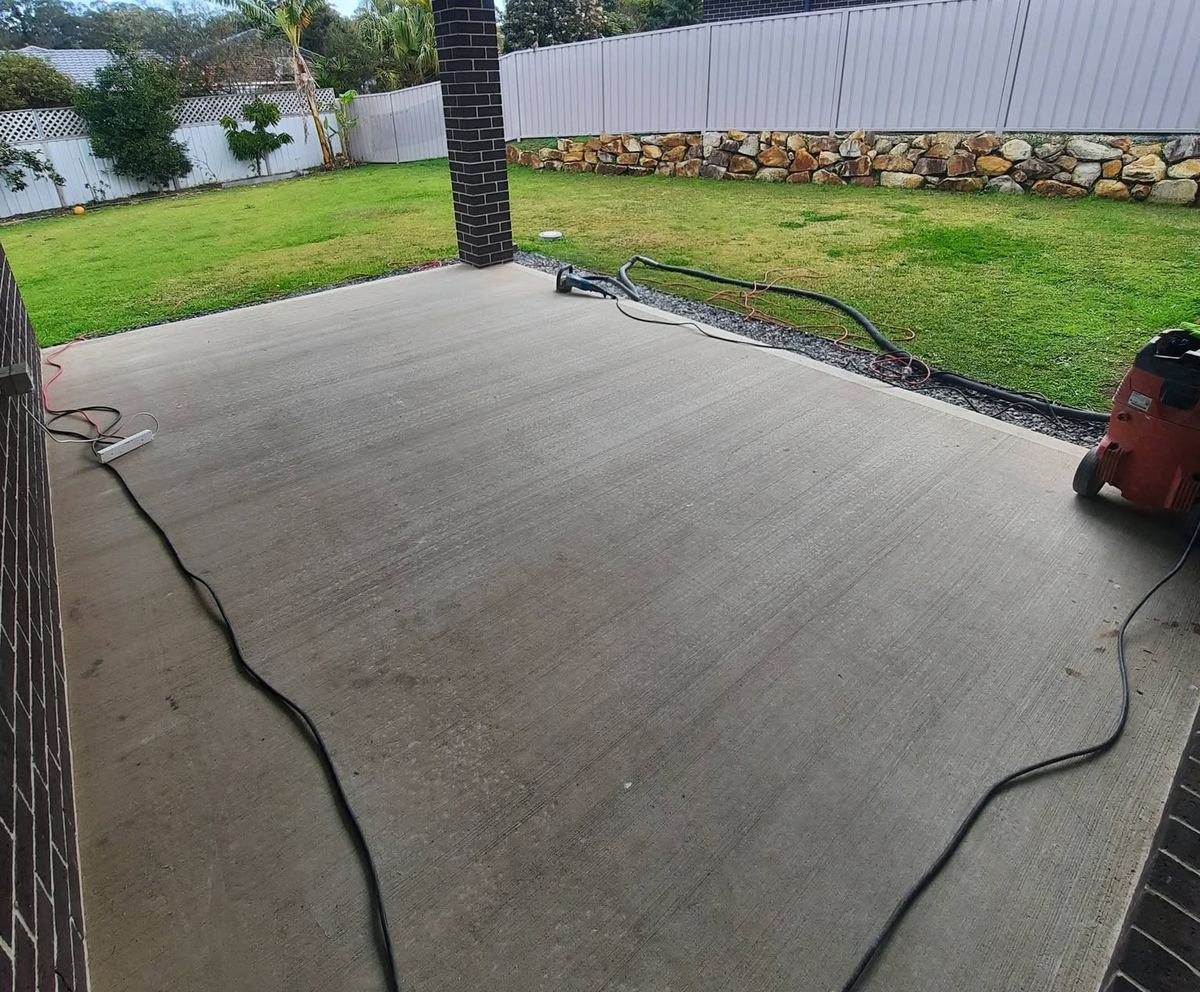
Preparing the slab mechanically rather than just cleaning it, so the system has raw concrete to key into. Dealing with whatever is already on the floor instead of coating over it. Repairing cracks where that is appropriate. And checking for moisture before, not after.
None of that is visible in the finished floor, which is exactly why it is the first thing a cheap quote leaves out.
How to tell whether a quote includes it
Ask what preparation is included and listen for a specific answer. Ask what happens if there is an existing coating. Ask what they do if they find moisture.
You are not testing their chemistry. You are testing whether they have looked at your floor and thought about it.
